
Hardwood floors add warmth and value to a home, but a single drag of a chair can leave a scratch that shows every time the light hits it. Most scratches do not come from accidents. They come from daily habits such as sliding a chair, rolling a desk chair, or pushing a table a few inches to reach a plug. Changing those habits protects the floor far better than any single product.
Learn How Scratches Happen
Scratches happen when a hard edge meets the finish under pressure. A chair leg with a nail, a grain of sand caught under a shoe, or a metal caster can cut through the top coat in one pass. Once the finish is broken, dirt works into the mark and makes it darker. The goal is to keep hard edges off the wood and keep grit off the floor.
Walk the room and look for the furniture that moves most often. Dining chairs, bar stools, and desk chairs cause more damage than heavy pieces that never move. A sofa or a bookcase may dent the floor if it is dropped, but a dining chair can scratch the floor every single day. Start your protection with the pieces that move.
Felt pads are the simplest and most reliable defense for furniture legs. Choose pads that fit the full bottom of the leg, not a small dot in the middle, so the weight spreads evenly. Stick-on pads work well on flat legs, while nail-on pads hold better on legs that get dragged often. Check the pads every few months, because a worn pad can expose a nail or a rough edge.
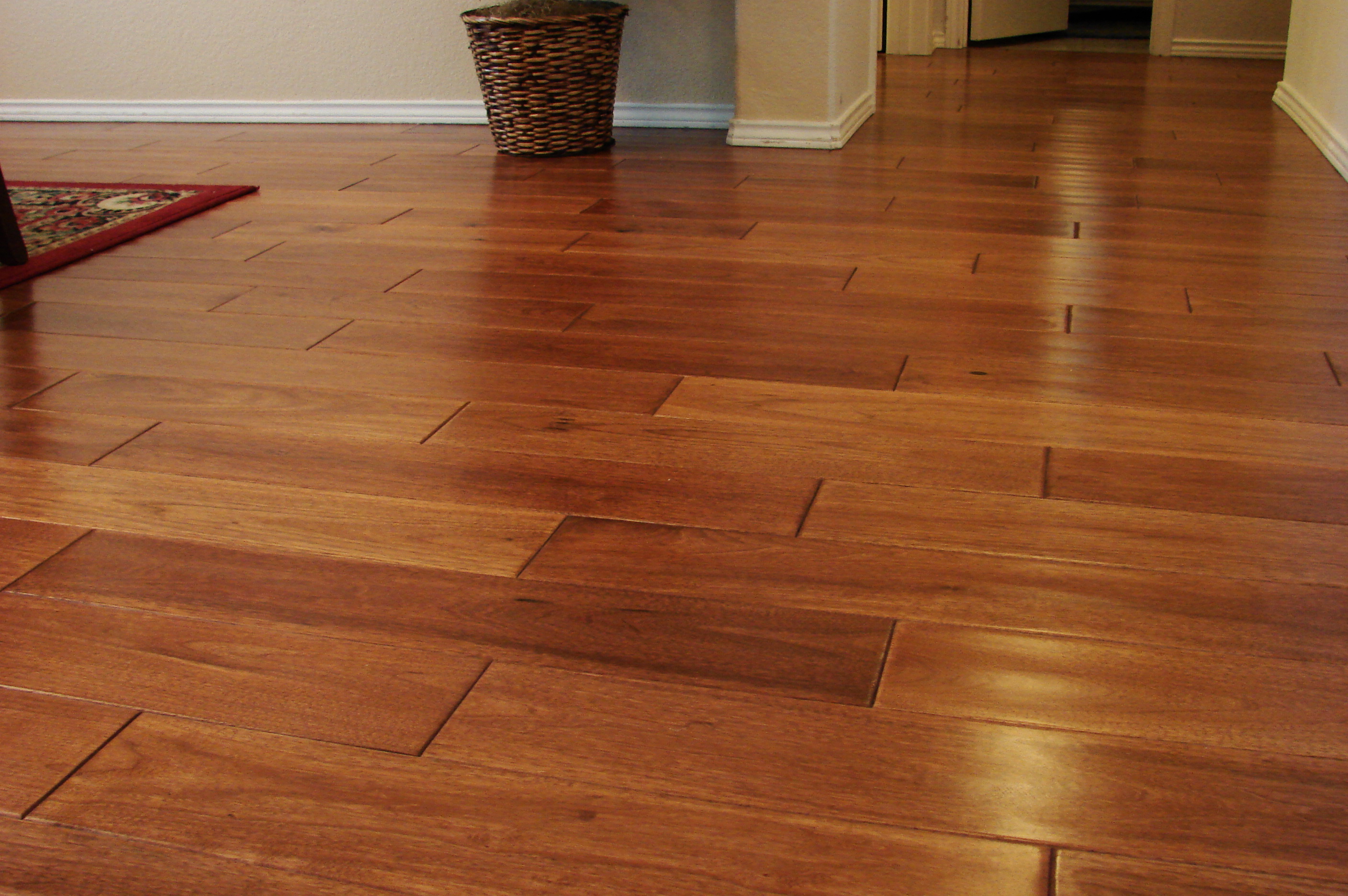
Put the Right Pads Under Every Leg
Use different pads for different floors and furniture. Thick felt pads suit chairs and tables on smooth wood, while rubber cups suit heavy pieces that must stay put. Avoid plastic glides on bare wood, because they can trap grit and slide across the finish. If a pad feels rough or thin, replace it before it causes damage.
Lift furniture instead of dragging it, even for a short move. A chair lifted with both hands leaves no mark, while a chair dragged six inches can leave a long scratch. When you must move a heavy piece, slide a folded towel or a moving pad under each leg first, then push slowly. Two people lifting a sofa is faster than one person dragging it.
Teach everyone in the house the same habit. Children, guests, and cleaners all move chairs, and a single reminder at the start of a visit can save the floor. Keep a small stack of felt pads and a few towels near the dining area so anyone can protect a leg in seconds.
Lift, Never Drag, When You Move Furniture
Rugs and runners guard the paths where feet travel most. A rug under the dining table catches chairs as they slide in and out, and a runner in a hallway keeps shoes and dirt away from the wood. Choose rugs with a soft backing or a separate rug pad, because a rough backing can scratch the floor it is meant to protect.
Desk chairs need special care because their wheels roll all day. A clear chair mat spreads the weight and stops the wheels from grinding grit into the finish. Check under the mat often, because grit trapped beneath a mat can scratch the floor in a circle that matches the chair path.
Keep the floor clean so grit never builds up. Sweep or vacuum with a hard-floor head several times a week, and mop with a cleaner made for hardwood.
Guard the Paths Where Feet and Wheels Travel
Place doormats inside and outside every entrance. A coarse mat outside removes heavy dirt, while a soft mat inside catches fine dust. Shake or wash the mats often, because a full mat stops working and lets dirt straight through.
Deal with small scratches as soon as you notice them. A light surface scratch often disappears with a touch-up marker or a small amount of finish that matches the floor. A deeper scratch that reaches the wood needs a careful fill and a light sanding before it can be sealed. Fixing a mark early keeps it from catching dirt and growing darker.
Ask everyone to leave shoes at the door when the weather is wet or sandy. Shoes carry the grit that scratches floors, and a simple shoe tray by the entrance keeps that grit in one place. House slippers with soft soles protect the floor and feel comfortable. A small bench near the door makes the shoe habit easy for guests.
Fix Small Marks Before They Grow
Keep humidity steady through the year, because dry air can shrink boards and open gaps where dirt collects. A humidifier in winter and good airflow in summer help the floor stay flat and tight. A stable floor is easier to clean and less likely to show wear.
Protecting hardwood floors is mostly about small habits repeated every day. Pad the legs, lift instead of drag, guard the busy paths, and clean up grit before it scratches. With those habits, a wood floor can stay smooth and bright for many years.
Your project does not have to end with this page — Bathroom with Wall Paint: Ideas, Inspiration & Expert Tips shows a good way to carry it forward.
Related Articles:
- Bathroom with Wall Paint: Ideas, Inspiration & Expert Tips
- Styling Balcony with Wallpaper: Expert Tips for Outdoor Decor
- Contemporary Attic: Design Ideas & Conversion Guide
Designing your own space?
Tell us in the comments which idea you would steal for your home or project.
Share this with someone planning a build or renovation.