
A spice collection can grow until you own three jars of cumin and no idea where the paprika hides. Organizing spices by how often you cook with them solves this, because the spices you reach for every day sit at the front, and the spices you use twice a year sit out of the way. The system matches the way you actually cook. Organize the jars once and the shelf stays tidy for months.
Sort Spices Into Three Frequency Groups
Start by gathering every spice in the kitchen. Pull jars from the cabinet, the drawer, and the counter, and lay them on the table. You will likely find duplicates, empty jars, and spices you bought for one recipe and never used again. A full gathering shows you the true size of the collection.
Sort the spices into three frequency groups. Daily spices are the ones you use most weeks, such as:
- Salt
- Pepper
- Cumin
- Chili powder
Weekly spices are the ones you use a few times a month, such as oregano, turmeric, and smoked paprika. Rare spices are the ones you use a few times a year, such as whole nutmeg, saffron, or a special curry blend.
Be honest about frequency. A spice you used once for a holiday recipe belongs in the rare group, even if you love it. A spice you reach for in every stir-fry belongs in the daily group, even if the jar is small. Honest groups make the system work, because the front of the shelf holds only what you truly use.
Put Daily Spices at the Front
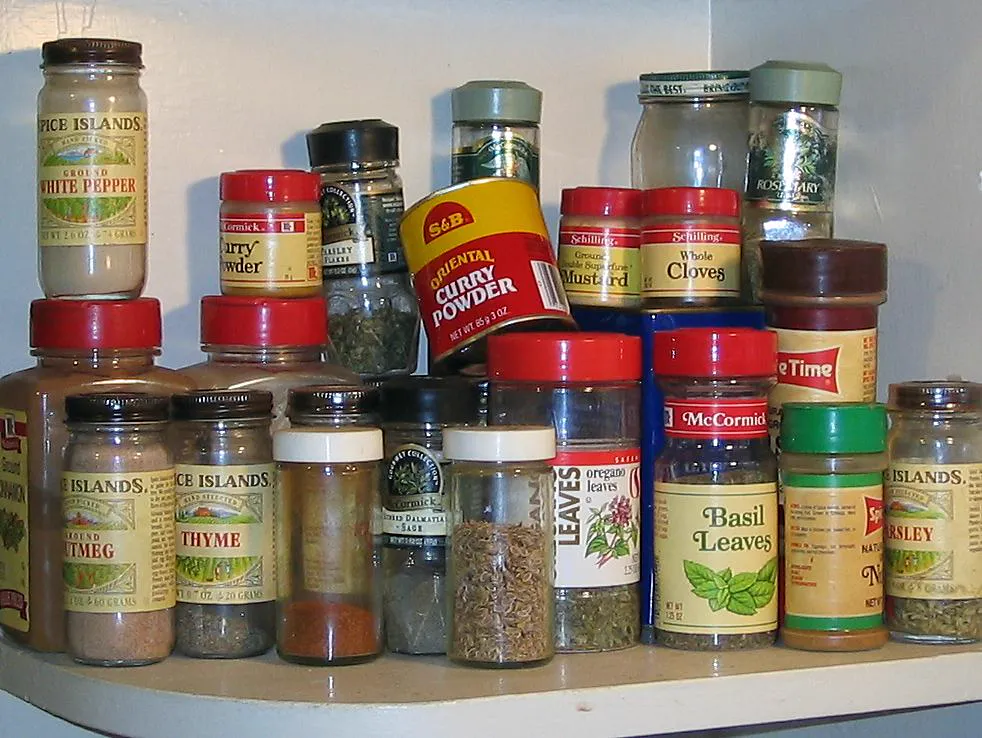
Put daily spices at the front. A small tray, a turntable, or the front row of a shelf can hold the daily group where you can see and reach them while cooking. When daily spices sit at the front, you never have to dig past a rare spice to reach the cumin.
Keep daily spices near the stove, but not over it. Heat and steam from cooking can dull spices fast. A shelf or a drawer within arm reach of the stove, but away from direct heat, keeps daily spices fresh and handy. A spice rack on the inside of a cabinet door also works well.
Give weekly spices a middle home. The second row of the shelf, a drawer below the daily spices, or a second tray can hold the weekly group. Weekly spices should take one extra step to reach, not a full search. A middle home keeps them close without crowding the daily spices.
A Turntable on the Shelf
A turntable on the shelf can hold the daily spices in one spin. Turntables bring the back jars to the front without moving every jar. A turntable with a low lip keeps jars from sliding off when it spins.
A small shelf inside the cabinet door can hold the daily spices. The door shelf keeps them visible and frees the main shelf for larger items.
Give Weekly Spices a Middle Home
Store rare spices out of the way. A high shelf, a back row, or a labeled box in the pantry can hold the rare group. Rare spices do not need daily access, and storing them out of the way frees the front of the shelf for the spices you use. Check the rare box before you buy a new spice, because you may already own it.
Use matching jars and clear labels. Matching jars make the shelf look tidy, and clear labels save time. Write the spice name and the date you bought it on each label. A label with a date tells you when a spice is past its best, because ground spices lose flavor after about a year.
Store Rare Spices Out of the Way
Decant spices into small jars that fit your shelf. A tall jar that does not fit the shelf ends up on the counter, and a counter full of jars becomes clutter. Choose jars that fit the shelf height and the tray, and buy the size that matches how fast you use each spice.
Check the system once a season. Smell each spice, toss the ones that have lost their scent, and move spices between groups when your cooking changes. A spice you used daily last year may become a weekly spice this year, and the shelf should follow your cooking.
A small funnel makes refilling spice jars easy. Pour spices through the funnel so they land in the jar instead of on the counter. A funnel kept with the spices saves a cleanup every time you refill a jar.
Buy spices in small jars when you cook with them rarely. A small jar stays fresh, while a large jar of a rare spice loses flavor before you finish it.
Label and Check So the System Stays True
Keep a small shopping list near the spices. When a daily spice runs low, write it on the list right away. A list kept with the spices stops the moment when you start cooking and find the cumin jar empty.
Organizing spices by frequency keeps the daily spices at the front, the weekly spices in the middle, and the rare spices out of the way. Sort honestly, label clearly, and check each season. The shelf stays tidy, and cooking gets faster.
Like this one? The short list below is built from the same shelf, and Organize Pantry with Curtains: Ideas & Benefits is a strong next pick.
Related Articles:
- Organize Pantry with Curtains: Ideas & Benefits
- Affordable Coastal Shower Curtain for Pantry
- Minimalist Pantry Organization: A Step-by-Step Guide
Designing your own space?
Tell us in the comments which idea you would steal for your home or project.
Share this with someone planning a build or renovation.