
Pick One Dominant Metal First
A kitchen with a single metal finish can feel flat, while a kitchen with five finishes feels chaotic. Mixing metals works when one metal leads, a second one supports, and every finish appears more than once. The result is a kitchen that feels collected and warm, with faucets, handles, and lights that belong together without matching exactly.
Start by choosing the dominant metal, which is usually the finish on the faucet and the largest hardware. In most kitchens this is brushed nickel, stainless steel, or brass. The dominant metal should cover roughly sixty to seventy percent of the visible metal in the room, so it reads as the main finish.
Look at the finishes you already own before buying new ones. Appliances, the sink, and the faucet are expensive to replace, so let them set the dominant metal. If your appliances are stainless steel, a brushed nickel faucet will harmonize with them, while a bright chrome faucet may fight the softer steel.
Keep the dominant metal consistent across the pieces people touch most: faucet, cabinet pulls, and appliance handles. When these three agree, the kitchen feels coherent even if the lighting and decor introduce a second metal. Touch points matter more than decorative pieces because hands and eyes return to them all day.
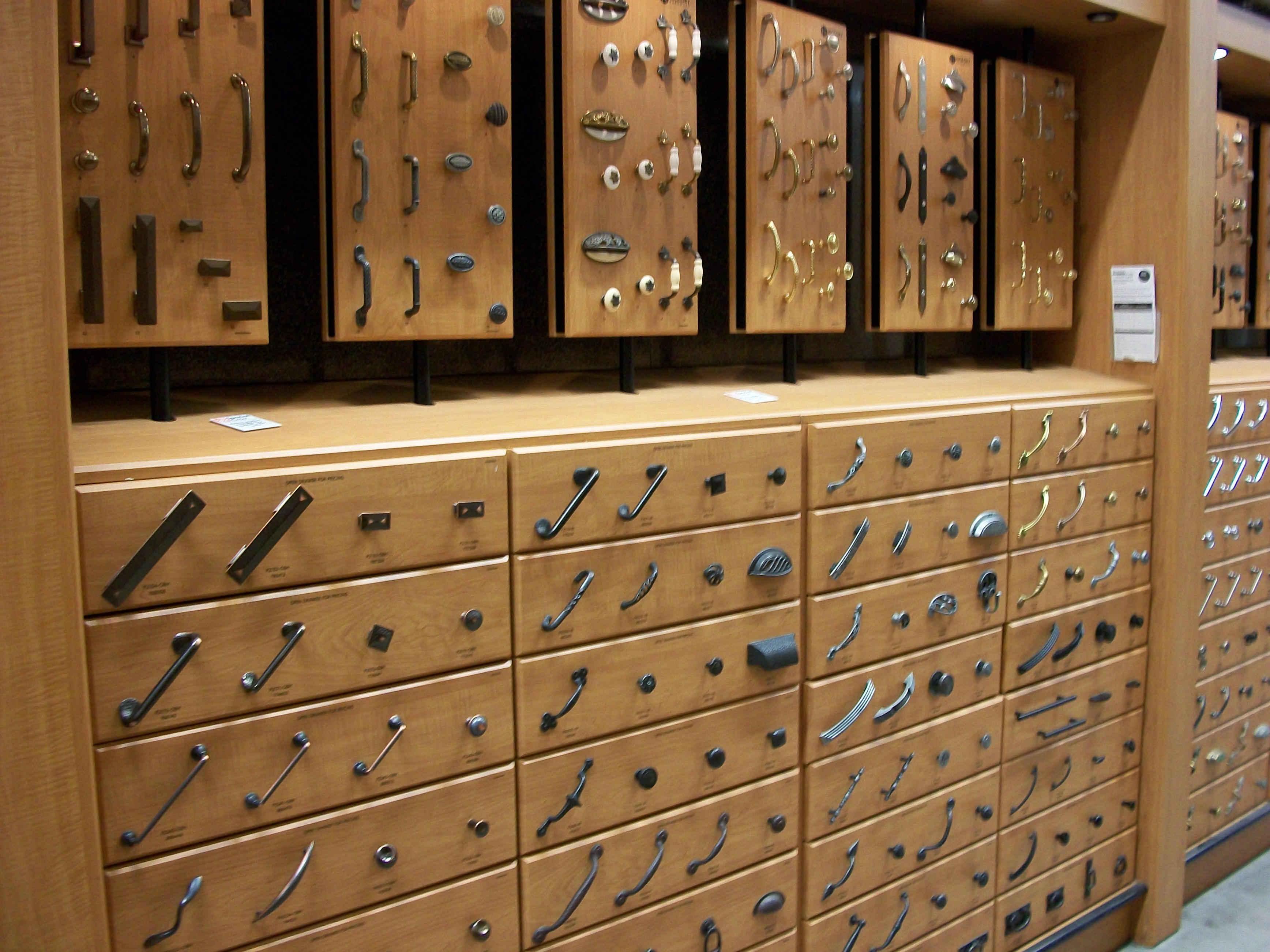
Add a Second Metal With a Purpose
Add a second metal only where it has a clear job. Pendant lights, bar stools, or a pot rail are good places for the accent metal, because each is a distinct element with its own zone. A second metal that appears randomly on one knob and nowhere else looks like a mistake rather than a choice.
Keep the accent metal to about thirty percent of the visible metal. Two pendant lights in brass above an island, plus brass knobs on the island drawers, is enough to establish brass as the accent. More than that, and the accent starts competing with the dominant metal for attention.
Avoid adding a third metal unless it is black, which behaves like a neutral. Three true metals, such as nickel, brass, and copper, rarely sit comfortably together in a small kitchen.
Test the two metals together in daylight and in evening light before you commit. Brass looks golden by day and warm brown at night, while nickel can look gray in one light and silver in another. Hold samples side by side at the counter and check them at both times of day.
Repeat Each Metal at Least Twice
Every metal in the kitchen should appear at least twice. A brass faucet paired with brass cabinet pulls reads as a plan, while a brass faucet alone reads as an accident. Repetition is the simplest way to make mixed metals look deliberate.
Repeat metals in different forms, not in identical pieces. A brass faucet, a brass pendant, and a brass tray have different shapes but share a finish, which keeps the repetition from feeling like a matching set. Variety of form with unity of finish is the goal.
Check sight lines as well as close-ups. Metals repeat best when you can see both occurrences from one spot in the kitchen.
If a metal appears only once, either add a partner for it or replace it. A lone copper pot hanging from a rail can gain a copper tray or a copper utensil holder nearby. Small additions are cheap and they turn an outlier into a pair.
Mind Undertones Warm Versus Cool
Undertones decide whether two metals get along. Warm and cool metals can mix, but they need a bridge, such as a black fixture or a wood tone, to keep them from clashing.
Match the undertone within each metal family. Aged brass and bright gold are both warm, but their different depths can still fight.
Consider the countertop and backsplash when you judge undertones. A white marble counter with gray veins supports cool metals, while a warm granite or butcher block counter supports warm metals. The metals should harmonize with the stone and wood around them, not just with each other.
When in doubt, choose brushed or satin finishes over polished ones. Brushed finishes hide fingerprints and water spots, and their soft texture lets different metals sit side by side without glare. Polished finishes reflect everything around them, which makes small differences in tone more obvious.
Use Black as the Bridge
Matte black works as a bridge between warm and cool metals because it reads as a neutral rather than a metal. Black faucets, black cabinet pulls, or a black pot rail can sit beside brass and nickel without competing with either. Use black sparingly, on the pieces that frame the other metals.
Black also grounds the kitchen visually. A black faucet against a white sink, or black handles on light cabinets, gives the eye a resting point. Keep black to about ten percent of the metal in the room so it frames the mix instead of becoming a third dominant finish.
Step back and look at the kitchen as a whole before you buy the last pieces. If one metal draws your eye more than the others, it has become the dominant finish whether you planned it or not. Rebalance by repeating the quieter metal once more, and the mix will settle into place.
Enjoyed this? Kitchen Island Seating Ideas for Casual Family Meals picks up right where this leaves off.
Related Articles:
- Kitchen Island Seating Ideas for Casual Family Meals
- How to Design a Kitchen Work Triangle That Saves Steps
- How to Plan a Kitchen Island With Storage on Every Side
Designing your own space?
Tell us in the comments which idea you would steal for your home or project.
Share this with someone planning a build or renovation.